
UNITRACK | One machine for every terrain on the earth
#UNITRACK
Silent. Savage. Rare.
No category exists for this. No shelf to place it on. One track. The swamp, the snow, the forest floor, the mud, the dunes — consumed. You move through terrain that does not need name on a map, through territory that has defeated everything else. Because you can. This is the #UNITRACK - terrain independent and unstoppable.
TECHNOLOGY
Since 1927, engineers have attempted to build the single steerable track. Prototypes. Concepts. Abandoned projects. The physics refused to cooperate — a track that bends, grips, and steers simultaneously was considered unsolvable. Juris Klava not only solved it, he patented the technology. What he did differently: he stopped treating traction, control, and recovery as trade-offs to optimise — and treated them as a failure of the system design itself. Read more
GEN1 EXCEEDS EXPECTATIONS
Built for terrain that does not stabilise across four seasons, #UNITRACK was born in a Latvian winter — frozen bog, black water, zero forgiveness. First tests are complete.
“I want to have a lot of fun.”
— Juris Klava, CTO
We took that as a principle: no matter how complex this gets, the joy of building it stays:
The work is in progress.
The lab has no windows.
But not everything stays hidden.
A few will listen.
A few will see.
Submit the form - we’ll show you what that means.

UNITRACK | TEAM
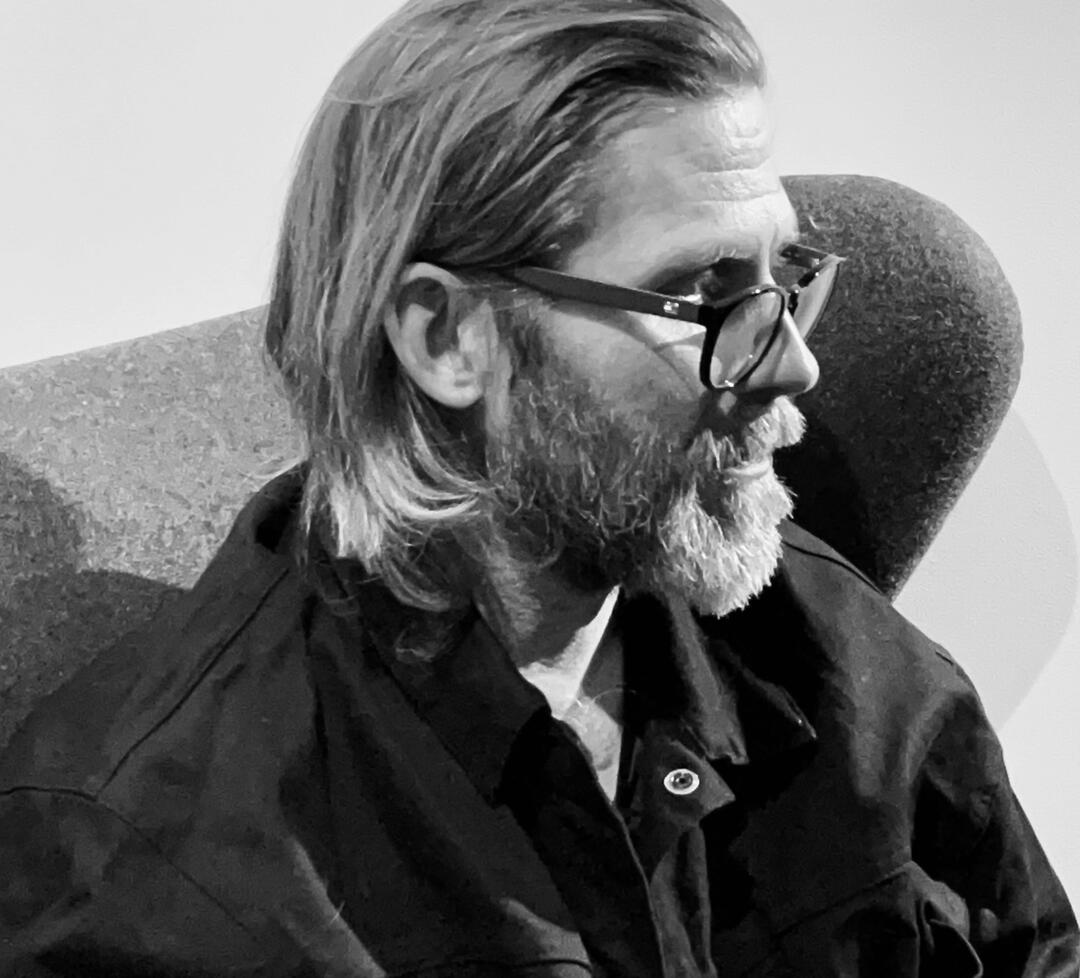
Juris Klava, CTO
15 years at the edge of what shouldn’t work.
Hardware, systems, machines — built where there were no instructions.
He doesn’t prototype.
He makes things function.
In 2023, he solved what others abandoned for nearly a century.
A bendable single-track system.
We call it the #UNITRACK.

UNITRACK | ABOUT
ORUGA is built in Riga, Latvia — at the midpoint of Europe’s eastern frontier, where the line between stability and instability is not abstract. It runs through forests, wetlands, frozen ground, and shifting terrain that does not forgive mistakes.
From Finland to Ukraine, this entire region carries the same reality: movement is not guaranteed. It is contested by seasons, by ground conditions, and increasingly, by geopolitical pressure. We stand in the middle of it — close enough to the North to understand precision and harshness, close enough to the South to know instability, mud, and unpredictability.
This position shapes how we think. Not as observers, but as participants. As part of a region that carries a shared responsibility — to hold the line, to adapt, and to endure.
Latvia is often described as the middle ground. In practice, it means exposure to everything: freezing winters, unstable spring terrain, dry and loose summer conditions, dense forests, wetlands, and sand. Nothing here is single-condition. Everything changes, often within the same route.
ORUGA is built out of this experience. Not from comfort, but from necessity. From the understanding that mobility cannot depend on ideal conditions, and that compromise is not a solution when failure has consequences.
This is not ruggedness as an aesthetic. It is capability as a requirement.
There is a different definition of comfort here — one based on control, reliability, and the ability to keep moving when conditions deteriorate. Wind, cold, heat, and instability are not exceptions. They are the baseline.
ORUGA is not designed to adapt to terrain. It is built in a place where terrain defines the rules — and where those rules are no longer negotiable.

UNITRACK | TECHNOLOGY
Most off-road vehicles are built on compromise. Wheels lose traction. Tracks lose control. Both fail when terrain changes.
UNITRACK does not try to optimise these trade-offs. It removes them.
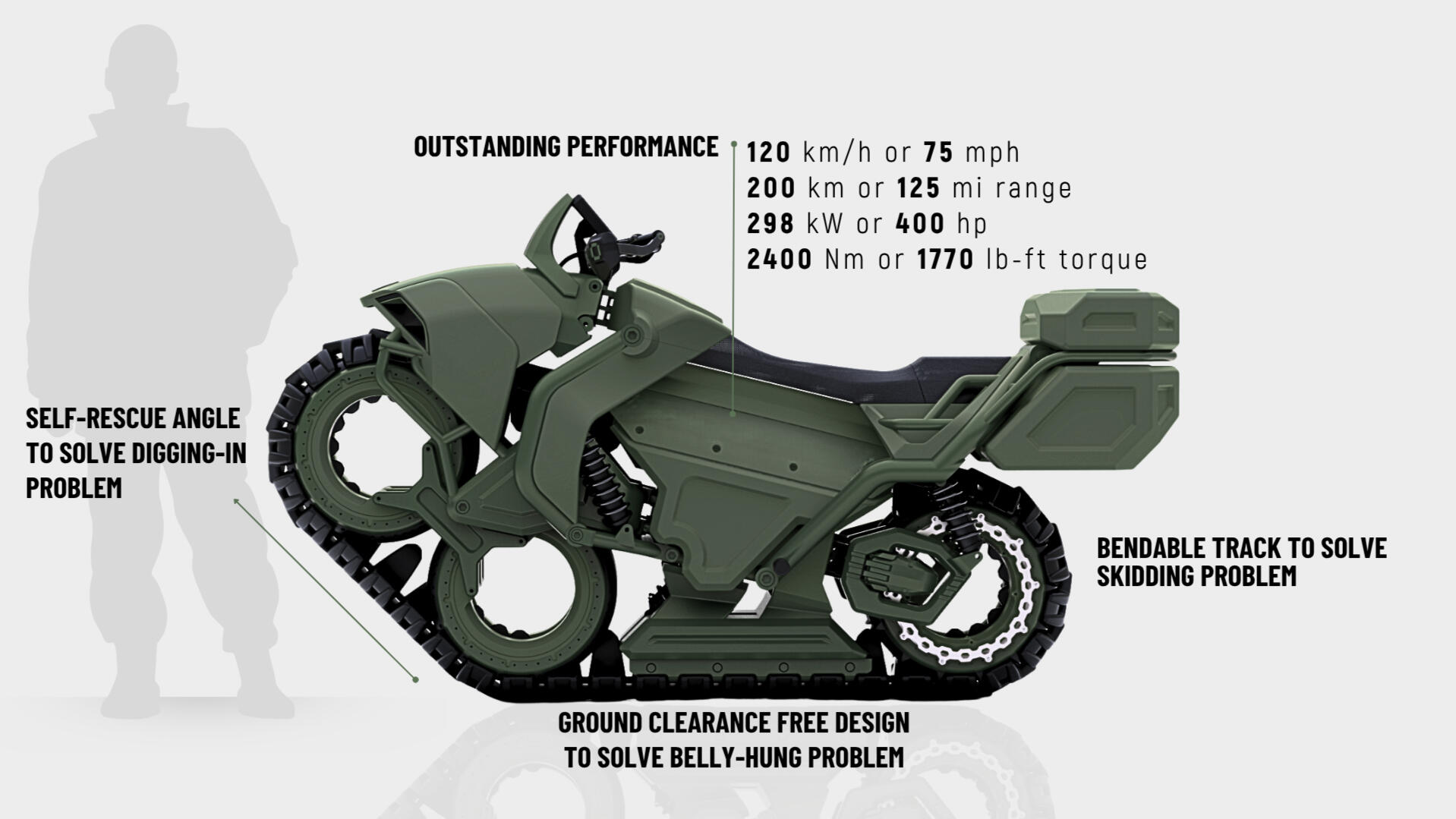
ORUGA UNITRACK is a steerable single-track electric vehicle built on a patented architecture that allows continuous ground contact while remaining fully controllable. The track does not just move — it adapts, bends, and follows direction without breaking traction. This eliminates the three failure modes that define off-road mobility today: loss of grip, belly-hang, and inability to recover.
The system operates without relying on ground clearance, using geometry and force distribution to move across soft, unstable, and mixed terrain where conventional vehicles stop. Snow, mud, sand, wetlands, forest — these are not different conditions for UNITRACK. They are the same environment.
Electric propulsion adds another layer: silent movement, reduced thermal signature, and lower mechanical complexity. The result is a high-performance all-terrain system that replaces multiple machines with one.
This is not an evolution of existing vehicles. It is a new baseline for how mobility works when terrain stops being predictable.

UNITRACK | CARRIERS
The most critical role at this stage is not a position, but a decision — to build something that does not yet exist.
If you bring capital, capability, or something we cannot ignore, we are listening.

UNITRACK | CAPITAL
Some companies improve products. Others redefine the system those products belong to.
ORUGA is building a new category of terrain-independent mobility, anchored in a patented architecture that enables capabilities unavailable in existing vehicle classes. This is not a feature advantage — it is structural.
The technology creates a defensible position at the core of a platform that can scale across multiple high-value sectors, including defence, infrastructure, forestry, and high-performance recreation. The same system adapts across use cases without losing its core advantage.
The company operates with a clear focus on IP, controlled development, and staged market entry. Its patent portfolio is structured internationally, with further expansion aligned with next-generation system development.
Interest has already been established across institutional, industrial, and investor networks in Europe and North America. Engagement is selective and ongoing.
ORUGA is currently opening conversations with partners and investors who understand that category-defining technologies require a different approach to scaling. This takes time. If that’s a problem, this isn’t for you.
If this resonates, reach out. [email protected]

UNITRACK | MEDIA
ORUGA moves in public, but not by accident.
Over the past year, the company has been present across defence expos, deep tech conferences, and international investor platforms — from Washington DC to Helsinki, from Toronto to the Baltics. The UNITRACK prototype has been demonstrated, tested, and discussed in environments where performance matters and claims are challenged.
CEO Liene Vītola actively participates in panels and discussions on defence innovation, dual-use manufacturing, and investment, engaging with policymakers, industry leaders, and ecosystem builders. This is not visibility for its own sake, but part of positioning a new mobility standard within the systems that will adopt it.
ORUGA works across sectors and geographies, contributing to conversations that shape how deep tech is built, funded, and deployed.
For media, partnerships, or speaking opportunities — reach out: [email protected]